Scaling Healthcare Service Operations With Salesforce, Asset Tracking, and Customer Portal Access
At a Glance
The Growth Heroes team helped a specialty healthcare services provider replace a limited legacy warehouse platform with a scalable Salesforce-centered solution for asset tracking, X-ray image management, customer review, finance integration, and service operations.
RCS services acute-care hospitals across 40+ states with a small team of roughly 40 employees.
Their legacy warehouse platform was slow, dated, difficult to update, and limited to a single X-ray machine.
The project team helped define the right technology strategy, including what should live in Salesforce and what should stay outside Salesforce.
The new solution uses Salesforce as the central source of truth, with integrations for QuickBooks Online, barcode scanning, and X-ray image storage.
All customers are now on RadComply™ 2.0, with over 10,000 garments reviewed since April 2026.
Hundreds of customers have access to the new customer portal, and more than 50% have logged in at least once.
About RCS
RCS cleans, sanitizes, repairs, inventories, and X-ray scans lead garments for healthcare providers. Based in Indiana, the company serves acute-care hospitals across the country.
Their work helps customers maintain properly cleaned garments, identify damage, and retain proof of annual X-ray inspections for audits.
Problem
RCS needed to scale warehouse operations, but its legacy platform was slow, difficult to update, and limited to a single X-ray machine.
Solution
Growth Heroes helped design and build a Salesforce-centered platform that supports asset tracking, X-ray image management, customer review, and integrated service operations.
Salesforce Data Architecture
Asset Tracking
Experience Cloud
Flow Automation
System Integration
The Challenge
A Legacy Platform Limiting Growth
RCS was ready to serve more customers, but its proprietary warehouse platform was becoming a barrier to growth.
The existing RadComply™ 1.0 platform was:
Limited to one X-ray machine
Dated and slow
Difficult to update
Not flexible enough to support the company’s growth goals
Creating efficiency challenges across warehouse operations
Before replacing the platform, RCS partnered with Growth Heroes to evaluate the broader technology stack and determine where Salesforce could create the most value, and where external systems would still be needed.
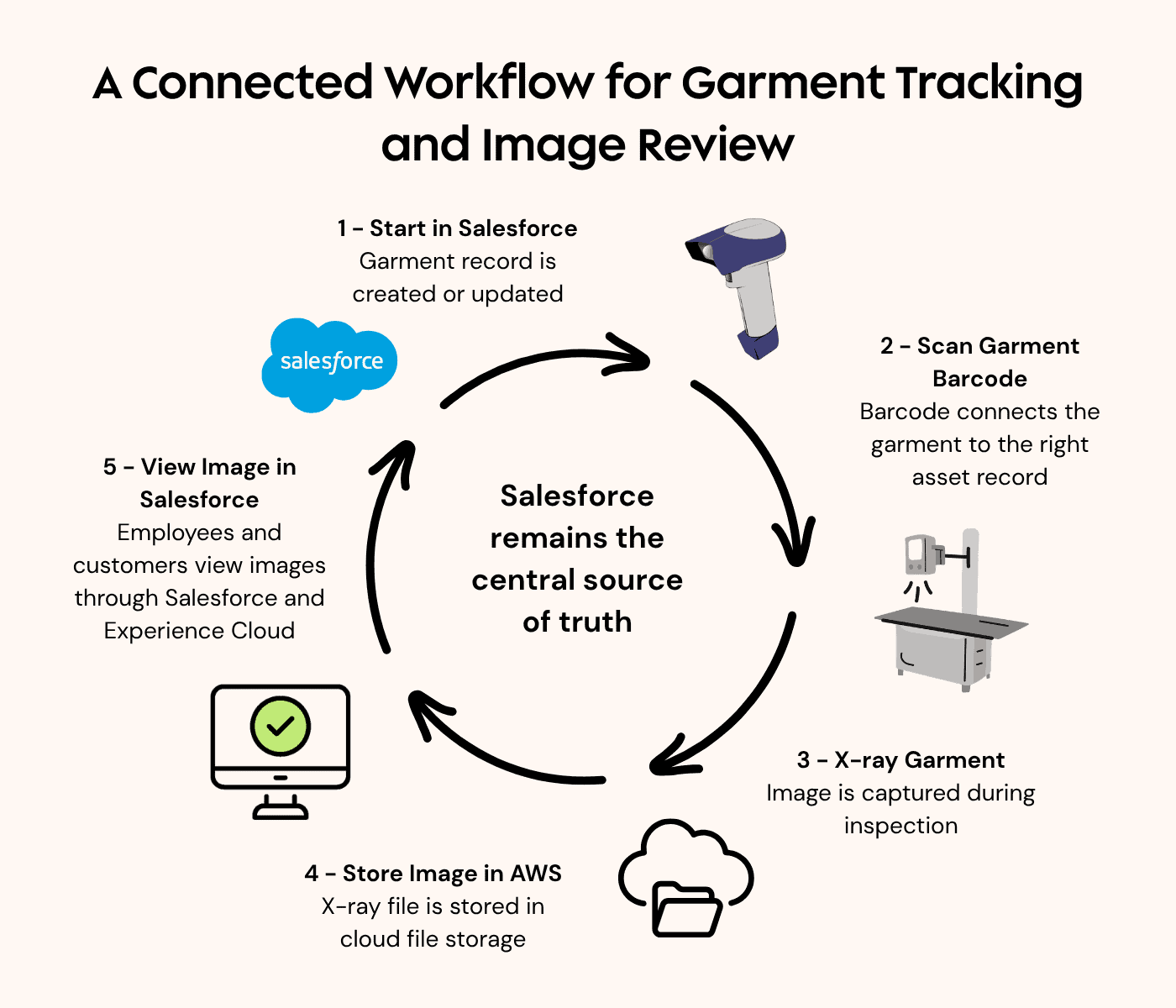
Growth Heroes helped RCS connect garment tracking, barcode scanning, X-ray image storage, and customer review through a Salesforce-centered workflow.
Key Challenges and Project Goals
RCS needed a scalable way to track garments, manage X-ray images, support warehouse technicians, give customers access to service records, and keep finance processes connected.
Growth Heroes helped their team define a clear roadmap for what should live in Salesforce, what should stay in external systems, and how data should move across the full service lifecycle.
Challenge 1: Scaling warehouse operations
RCS was ready to serve more customers, but its warehouse operations were constrained by a legacy platform that was slow, difficult to evolve, and limited to one X-ray machine. Garments needed to move efficiently through scanning, tracking, review, repair, X-ray imaging, and customer documentation, but key service-floor data lived outside Salesforce, creating friction as demand grew.
Challenge 2: Making Salesforce the source of truth
RCS already used Salesforce for account and service planning, but warehouse execution lived in a separate custom system. That split created data fragmentation between sales, scheduling, service-floor activity, compliance records, and customer review.
The project team recommended moving core orchestration and compliance data into Salesforce while keeping hardware-specific processes and external file storage connected where needed.
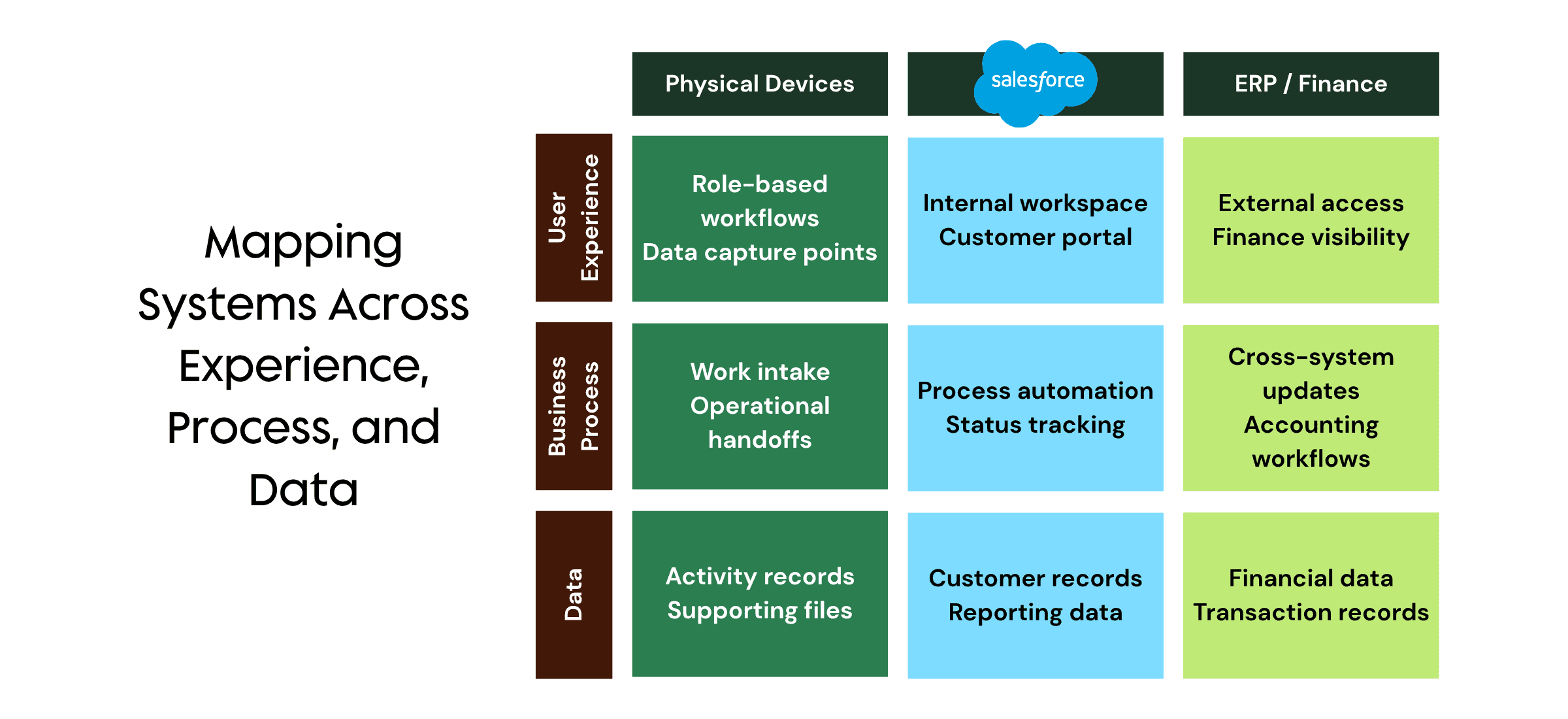
Growth Heroes helps clients map user experience, business processes, and data across Salesforce and connected systems before building the solution.
Challenge 3: Tracking garments as individual assets
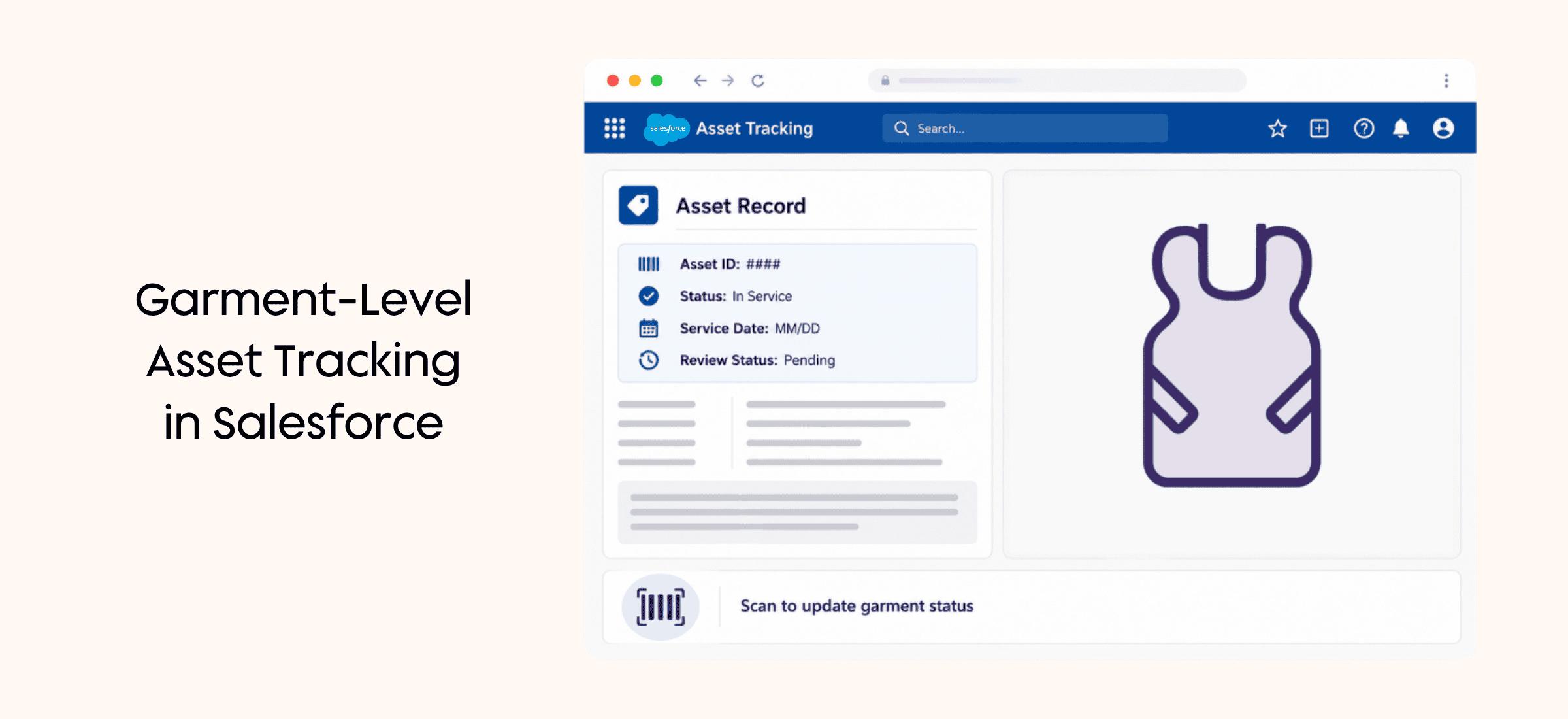
RCS’s Salesforce setup previously tracked high-level garment counts, but that was not enough to support compliance at scale. The future-state solution needed to treat each garment as a uniquely identified asset, tied to barcode tags, service history, review workflows, and the right customer account.
It also needed to account for different asset categories, including customer garments, loaner garments, and containers.
Challenge 4: Connecting historical and new X-ray images
RCS needed X-ray images to connect reliably to the right garment records in Salesforce. That meant syncing new image files from AWS and linking them to the correct assets, while also accounting for roughly 200,000 historical images from the legacy system.
The migration was especially complex because many older files did not include clean asset identifiers, and some images were historically tied to more than one garment.
Challenge 5: Improving the customer experience
RCS’s legacy portal was slow and difficult to use, creating friction for customers who needed to review garment images and access audit documentation. The future-state portal needed to give customers a secure, intuitive way to review suspected damage, approve or fail garments, use bulk actions when appropriate, and pull required compliance records without manual intervention.
Praise for the Growth Heroes Team
The team at Growth Heroes has been great to work with. They helped us build a system that no longer limits our operations to a single X-ray machine. We now have a more scalable foundation that can support multiple machines, additional locations, and the continued growth of our business.
Zach Wills CEO, RCS
The Solution: A Salesforce-Centered Operating Model
Today, RCS has a Salesforce-centered platform that supports the way its team works across warehouse operations, asset tracking, X-ray image management, customer review, and finance processes.
Instead of simply replacing one system with another, Growth Heroes helped them design a scalable operating model. Salesforce became the central source of truth, while connected tools support the specialized warehouse, finance, and image-management functions needed to run the business.
1. Discovery and Roadmap
The project team reviewed materials from prior discovery sessions, interviewed the CEO and Service Managers, toured the warehouse, diagrammed business processes, recommended a technology stack, compared solution approaches, and created a project roadmap.
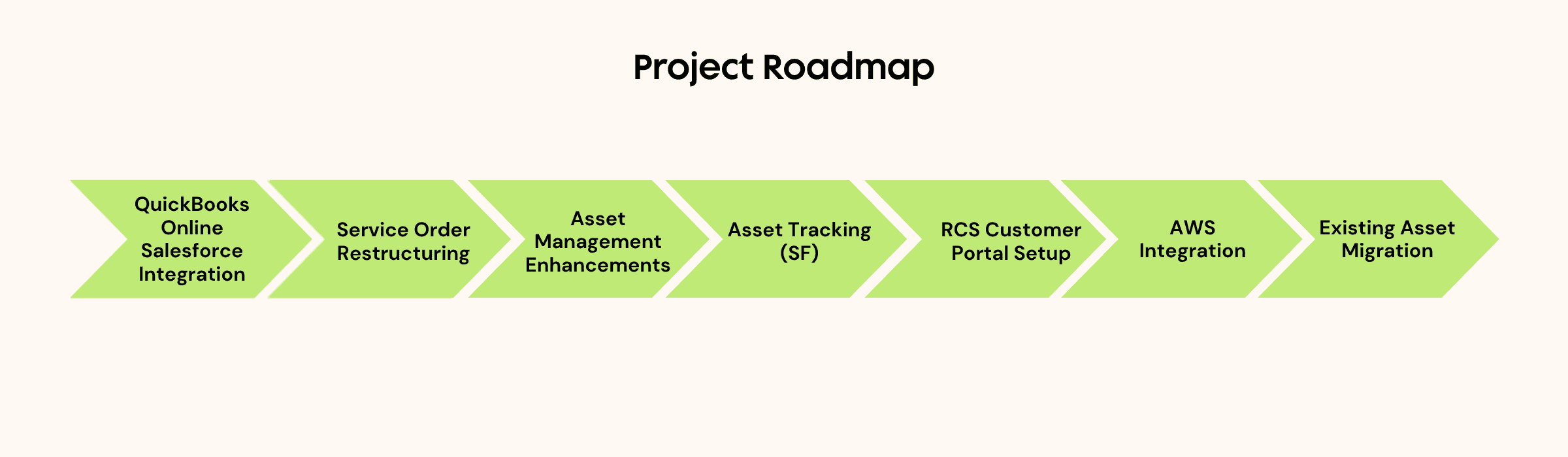
Growth Heroes mapped a phased roadmap that brought warehouse asset tracking into Salesforce, connected X-ray image workflows, and prepared the customer portal for launch once image syncing was complete.
2. Salesforce Data Model and Asset Tracking
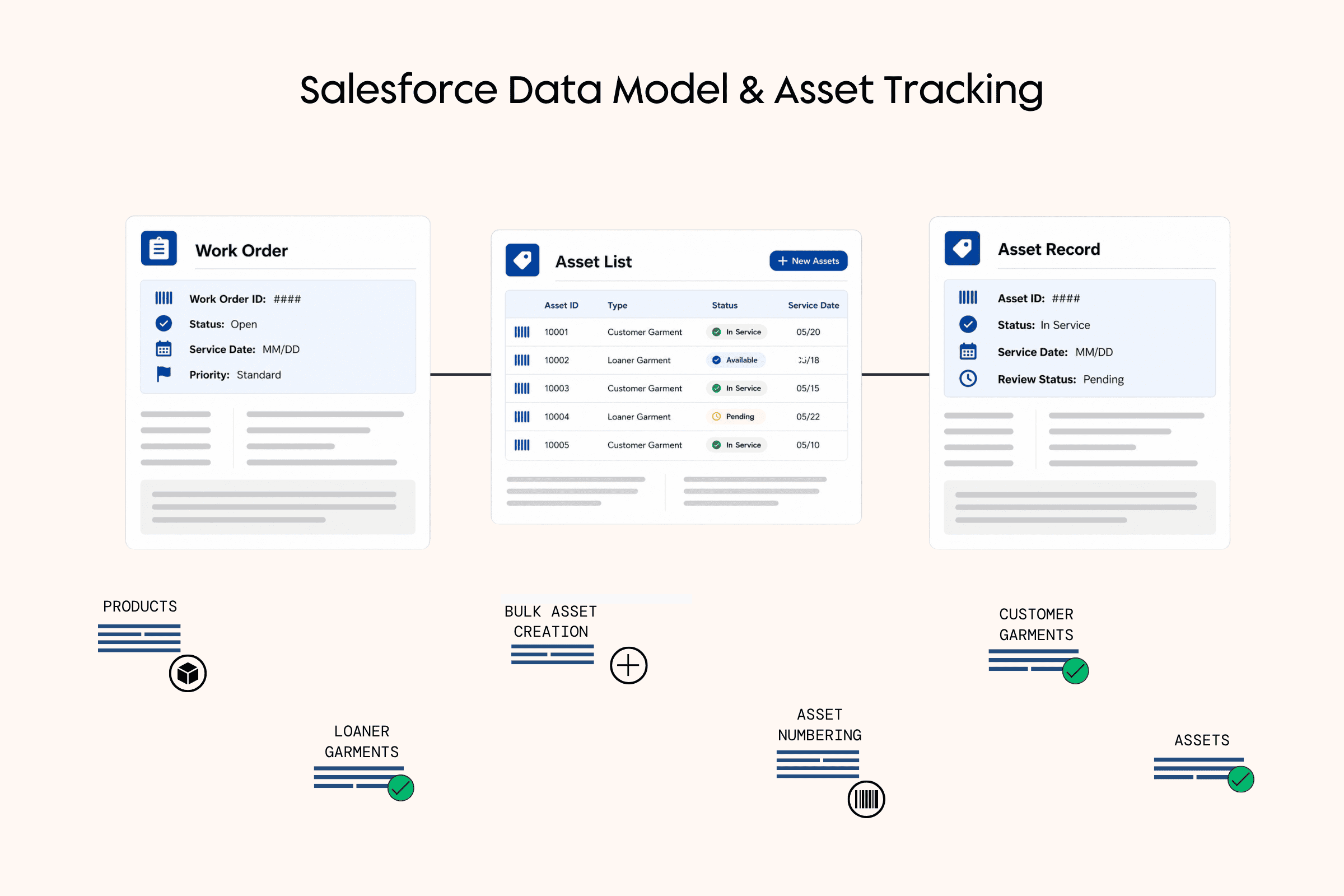
Growth Heroes enhanced the Salesforce data model to support garment-level asset tracking, including Assets, Work Order Line Items, products, customer garments, loaner garments, asset numbering, and bulk asset creation.
Connected Salesforce objects support garment-level asset tracking, work order activity, asset numbering, and bulk asset creation.
3. Warehouse Operations
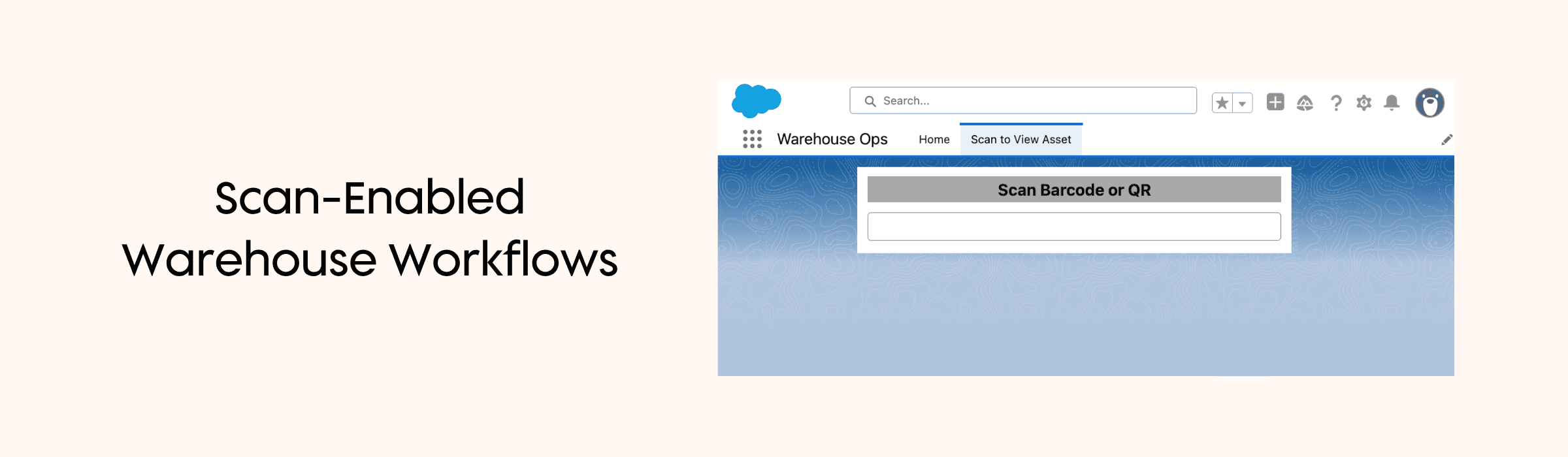
Technicians can now use Salesforce-connected scanning workflows to capture new garment details, print tags, document damage or repair needs, scan garments in and out of service, and retrieve garment details.
Salesforce-connected warehouse scanning workflow that helps technicians capture garment details, print tags, document repair needs, update service status, and retrieve asset records.
4. AWS and X-ray Image Integration
An AWS-Salesforce integration framework was built to sync image and scan details from AWS S3 to Salesforce and link images to the right Assets and Work Order Line Items.
Garment-level asset tracking mockup showing how Salesforce can connect individual protective garments to service status, review workflows, and barcode-based updates.
5. Customer Portal With Experience Cloud
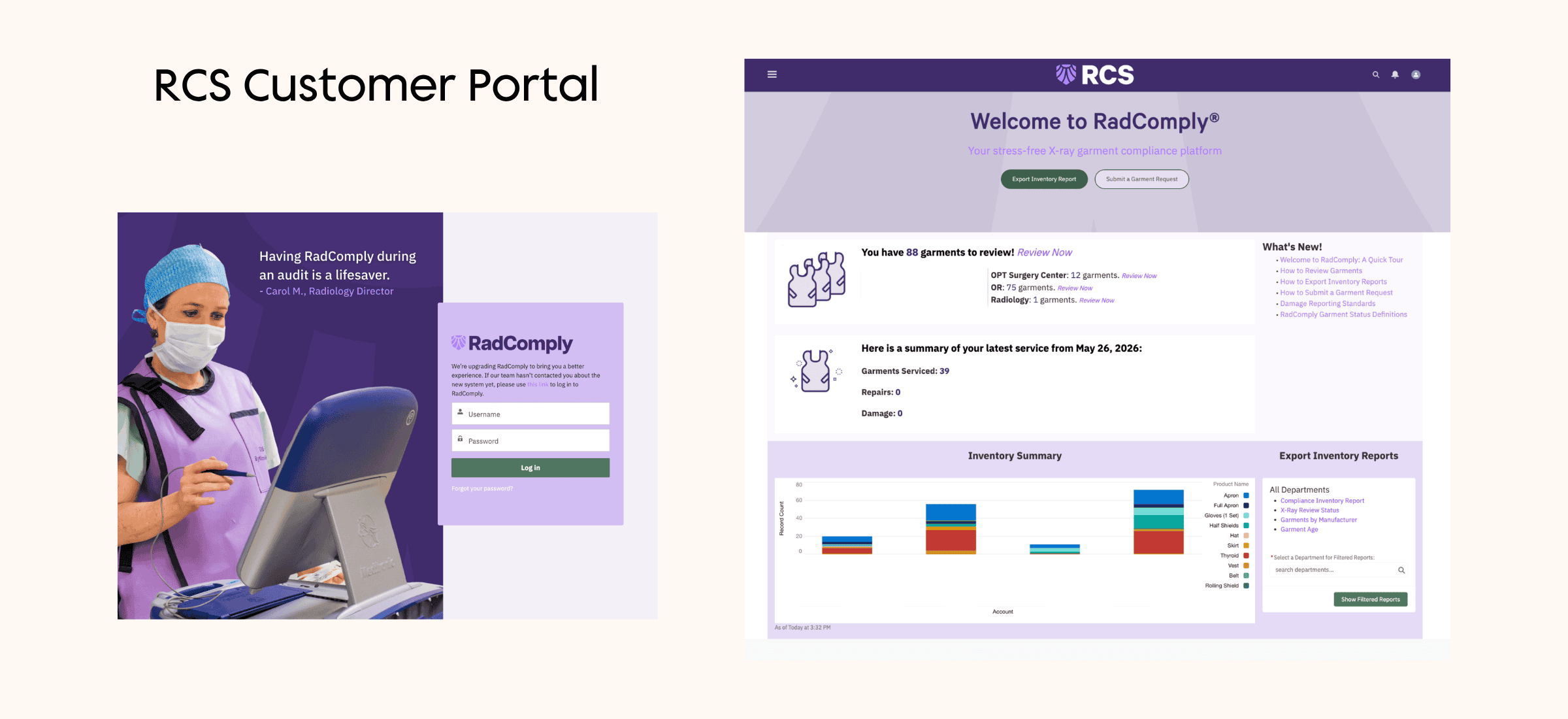
The project team configured a Salesforce Experience Cloud portal with secure sharing settings, automated user access, customer-facing reports, dashboards, and custom review experiences.
This portion of the project focused on configuring Salesforce Experience Cloud to support the RCS Customer Portal.
6. Custom Review Interfaces
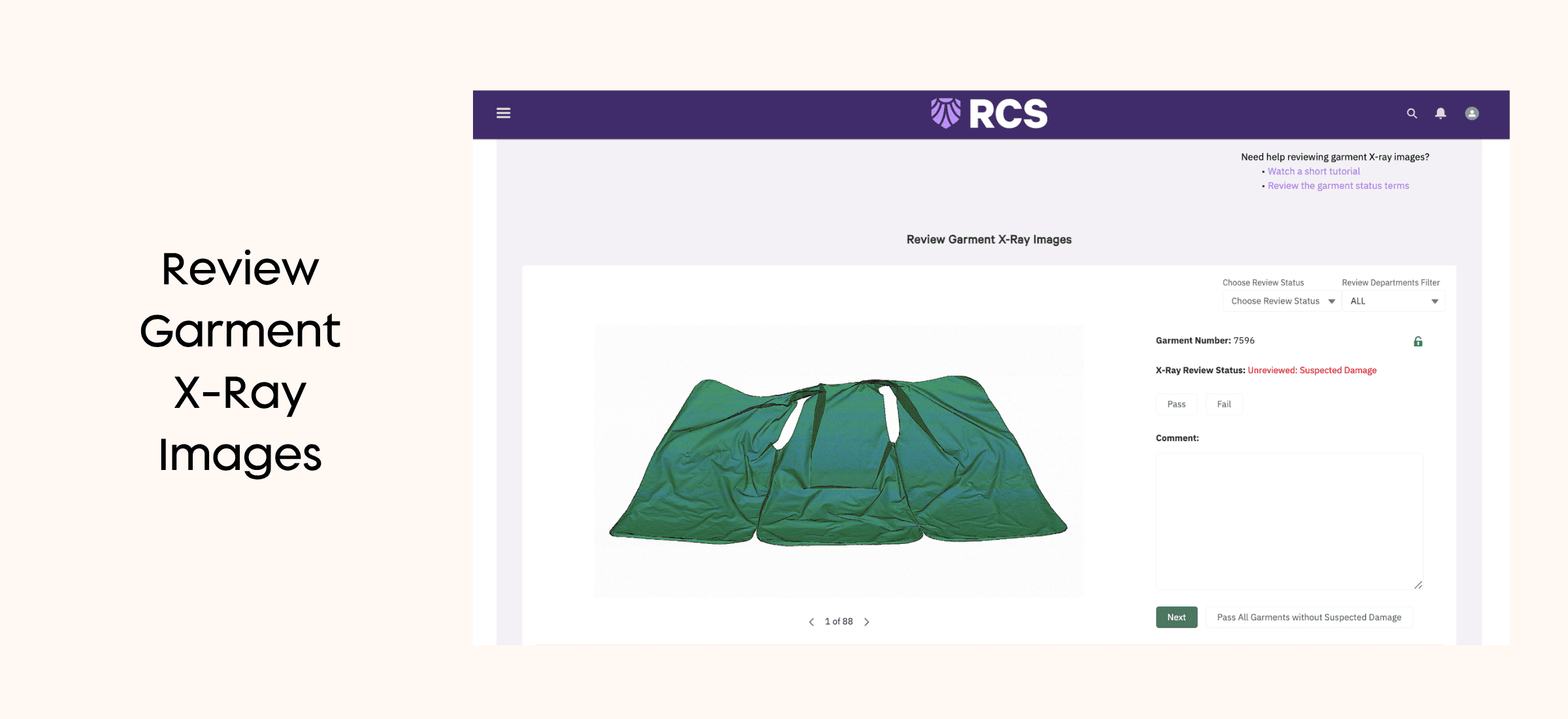
Custom Lightning Web Components were designed for both customer garment review and internal garment review, making it easier to review, approve, sort, and manage garment images.
A custom Salesforce interface helps streamline garment image review for both customer-facing and internal approval workflows.
7. QuickBooks Online Integration
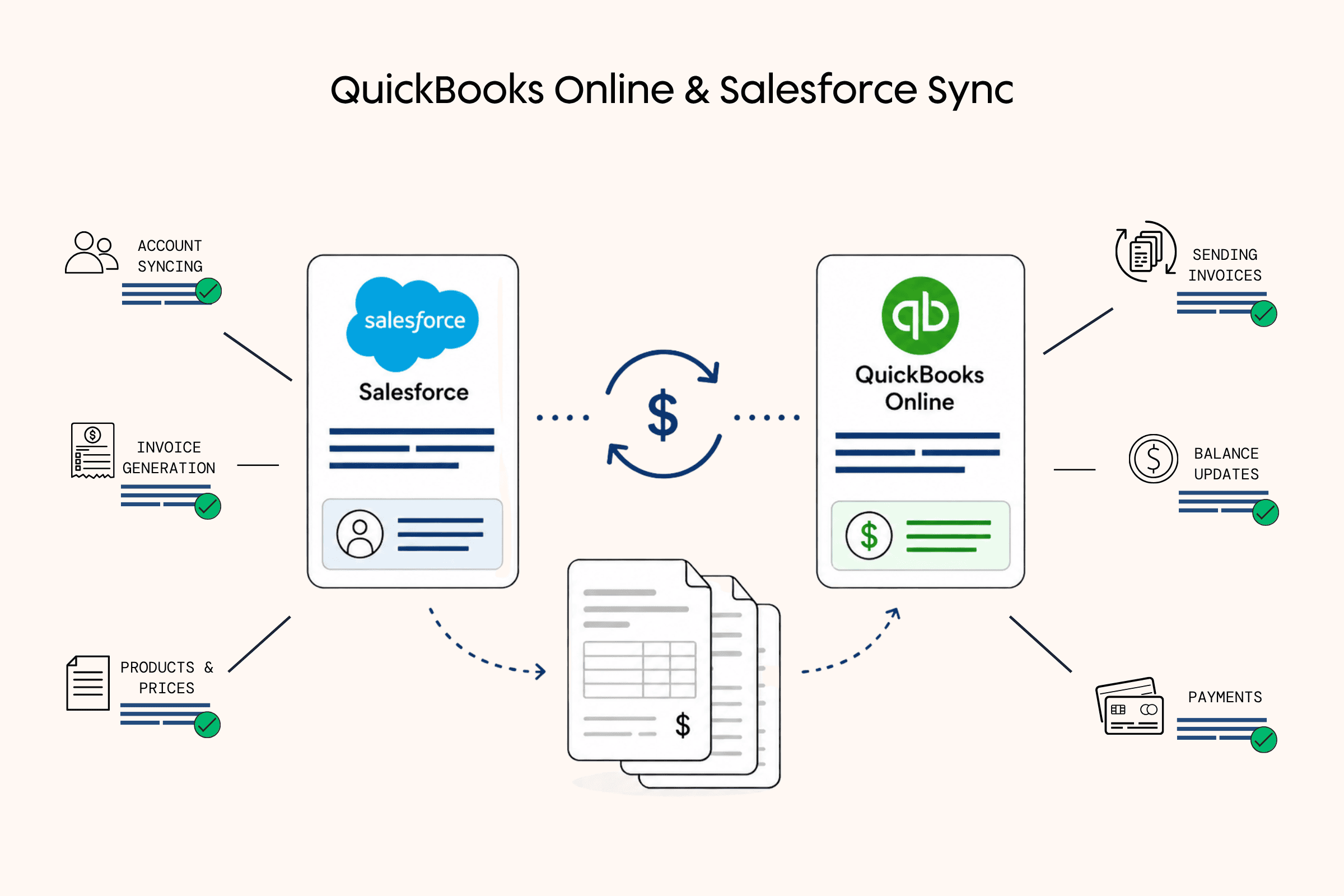
Growth Heroes connected QuickBooks Online with Salesforce supporting account syncing, automated invoice generation, invoice syncing, and invoice balance updates from QuickBooks back into Salesforce.
Growth Heroes connected QuickBooks Online with Salesforce to support account syncing, automated invoice generation, invoice syncing, and invoice balance updates from QuickBooks back into Salesforce.
The Results
Scalable
from a single machine to an infinite number of locations
2.42x
page load speed increase for customers
10,000+
garments reviewed in just 2 months following migration
200,000
existing QR tagged assets to the new portal without applying new tags
58.7%
reduction in time for technicians to conduct a single scan
One
Salesforce-centered source of truth for service, customer, asset, and image-related data
Ready to scale service operations with systems customized to your unique business advantage?
Growth Heroes can help you connect Salesforce, data, automation, and customer experience so your team can grow with confidence.